
Clinically reviewed by
Mary Gianatasio, MA in Child Psychology
Many parents notice certain movement patterns in children that can be difficult to fully explain - constant fidgeting, trouble sitting still in a chair, sensitivity to clothing around the waist, or an ongoing need to move. In some cases, these behaviors may relate in part to a primitive reflex known as the Spinal Galant reflex.
Primitive reflexes are automatic movement patterns present during infancy that help support survival, birth, and early neurological development. As the brain and nervous system mature, these reflexes are typically integrated into more coordinated, voluntary movement patterns.
The Spinal Galant reflex is one of the earliest of these reflexes and plays an important role in both birth and motor development.
What Is the Spinal Galant Reflex?
The Spinal Galant reflex develops in utero around 20 weeks gestation and is typically fully present at birth.
The reflex is triggered when the skin along one side of a baby’s lower back is gently stroked. In response, the hips and trunk naturally curve or shift toward that side. This automatic movement is a normal part of early neurological and motor development. As babies gain greater postural control and voluntary movement, the reflex typically begins to fade during early infancy and is often integrated between approximately 3–9 months of age.
This reflex is believed to support:
Movement through the birth canal during labor
Early hip mobility
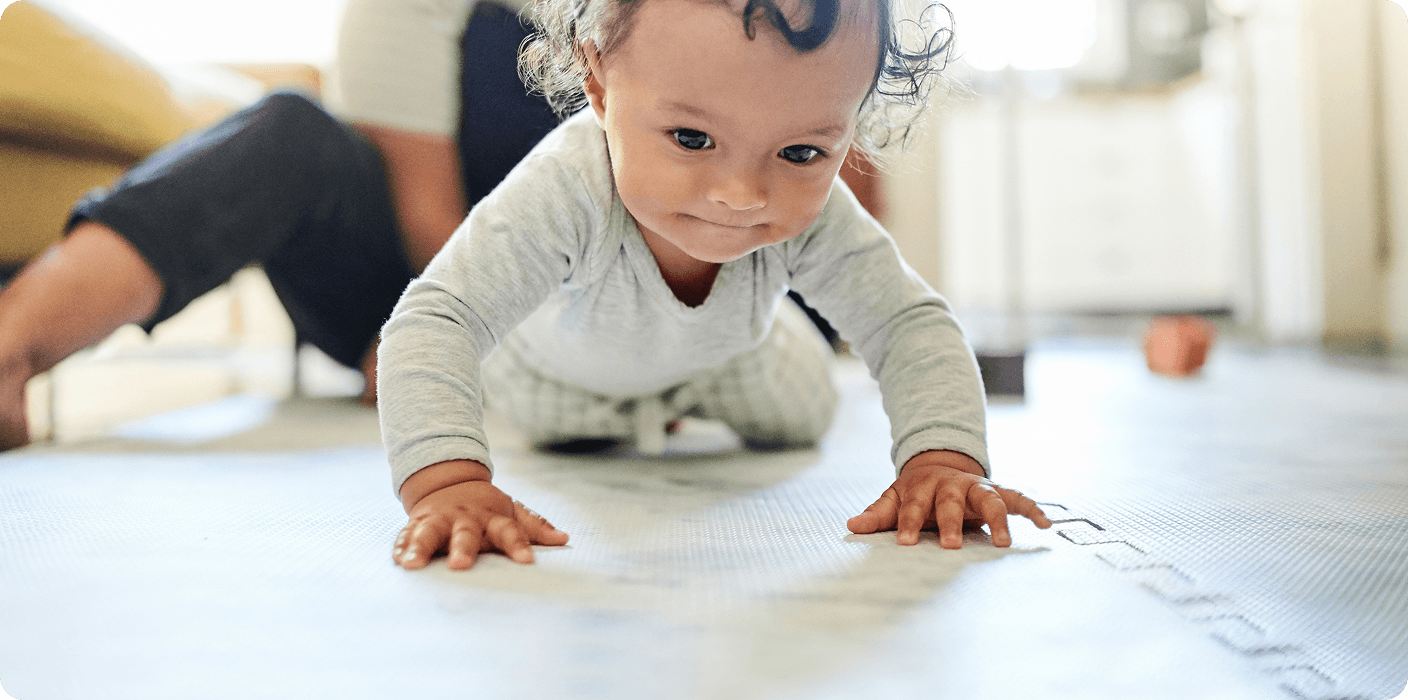
Development of crawling and walking patterns
Vestibular and sensory system development
Some developmental research suggests that persistent or unusually strong reflex responses during infancy may be associated with differences in later motor coordination and movement quality.In one observational study, abnormal Galant reflex responses at 3 months were linked with delayed crawling and reduced movement quality later in development.
Why Is the Spinal Galant Reflex Important?
Like other primitive reflexes, the Spinal Galant reflex helps organize early movement and sensory experiences during infancy.
The reflex contributes to:
Early Motor Development
The side-to-side hip movement associated with the reflex supports mobility patterns needed for rolling, crawling, and later walking.
Sensory and Vestibular Development
The reflex is closely connected to the vestibular system, which helps regulate balance, body awareness, spatial orientation, and movement processing.
Postural Control
As the nervous system matures, integrating the reflex supports improved trunk stability and more coordinated posture.
Neurological Organization
Primitive reflexes help establish communication between sensory input and motor responses during early development. Over time, these automatic patterns are gradually replaced by more refined and intentional movement.
Importantly, researchers emphasize that primitive reflexes are only one part of development. Overall movement patterns, coordination, posture, and sensory processing may provide a broader picture of how the nervous system is maturing.
What Happens if the Reflex Remains Active?
When the Spinal Galant reflex remains active beyond infancy, it is sometimes referred to as a retained reflex.
Some clinicians and therapists observe that retained Spinal Galant patterns may contribute to:
Excessive fidgeting
Difficulty sitting still for long periods
Poor posture
Wiggling or squirming in chairs
Sensitivity to waistbands or certain clothing textures
Challenges with focus and body regulation
Bedwetting in some children
Because the reflex is activated by stimulation along the lower back, even contact from waistbands, chair backs, or clothing may trigger subtle movement responses in some children.
Research in this area is still evolving, and experts note that retained reflexes should be viewed within the bigger picture of a child’s development, including movement, sensory processing, posture, and daily functioning.
Why Movement and Sensory Input Matter
Children develop through movement. Crawling, climbing, rolling, balancing, spinning, jumping, and exploratory play all provide important sensory information that helps organize the nervous system.
From an integrative perspective, focus, regulation, posture, and motor coordination are influenced by multiple interconnected systems, including:
Sensory processing
Vestibular development
Sleep and circadian rhythms
Stress regulation
Nutrition and metabolic health
Physical movement and outdoor play
Emotional safety and co-regulation
When children have opportunities for varied movement and sensory-rich experiences, the nervous system receives important input that supports maturation and regulation over time.

Factors That May Influence Reflex Integration
The reasons a primitive reflex may remain active are often complex and multifactorial. Some developmental professionals note associations with factors such as:
Limited tummy time
Reduced crawling opportunities
Limited opportunities for varied movement and sensory experiences
Premature birth or low birth weight
Birth interventions or cesarean delivery
Early stress exposure
These associations are not necessarily causal, but they may influence how sensory and motor pathways develop during infancy and early childhood.
Some researchers also suggest that observing early movement patterns may help identify children who could benefit from additional developmental support earlier on.
A Simple Home Observation
Some parents become curious about the Spinal Galant reflex after learning about primitive reflexes.
A simple observational screening can be done by having the child lie comfortably on their stomach while gently stroking down one side of the spine. An active reflex response may include hip movement, side bending, or wiggling away from the touch.
A very strong response - or no response at all beyond the expected developmental stage - may sometimes warrant further evaluation within the context of a child’s overall development and motor skills.
However, home observations are not diagnostic tools. If parents have concerns about motor coordination, focus, sensory processing, or developmental patterns, it is best to consult with a qualified healthcare professional.
Supportive Activities for Reflex Integration
Many of the same activities that support healthy childhood development may also help support reflex integration and sensory-motor organization, including:
Tummy time during infancy
Crawling and floor play
Rolling and climbing activities
Heavy work and resistance-based movement
Sensory-rich outdoor play
Balance and coordination exercises
Rhythmic movement activities
Alternative seating options that allow gentle movement
Some children may also benefit from occupational therapy, physical therapy, or developmental movement programs tailored to their individual needs.
Emerging therapeutic approaches are also exploring whether targeted movement-based and sensory-motor interventions may support reflex integration and motor regulation in certain children.
An Integrative Approach to Supporting Regulation
Children who struggle with sitting still or focus often benefit from support that looks beyond behavior alone.
An integrative approach may include:
Supporting nervous system regulation through movement and sensory input
Optimizing sleep quality and daily rhythms
Ensuring adequate nutrition for brain and neuromuscular development
Encouraging outdoor time and physical activity
Reducing chronic stress and overstimulation
Building emotional safety through responsive relationships
These foundational supports help create the conditions for more regulated movement, attention, and sensory processing over time.
When Should Parents Seek Guidance?
Parents may consider speaking with a pediatrician, occupational therapist, physical therapist, or developmental specialist if a child consistently experiences:
Difficulty sitting still
Ongoing coordination challenges
Sensory sensitivities
Delayed motor skills
Persistent bedwetting beyond expected developmental stages
Noticeable discomfort with clothing around the waist
A comprehensive evaluation can help determine whether additional support may be beneficial.
Final Thoughts
The Spinal Galant reflex is a normal and important part of early infant development, helping support birth, movement, and sensory organization. As children grow, this reflex is expected to integrate naturally as the nervous system matures.
For some children, retained reflex patterns may contribute to movement, posture, or sensory regulation challenges. Supporting healthy development through movement, play, sleep, nutrition, sensory experiences, and emotional connection can help nurture the neurological foundations that support focus, coordination, regulation, and resilience throughout childhood.
References
Stokey, P., Ravi, S., & Ebraheim, N. (2022). Moro Reflex: A Mini Review of Literature. Journal of Clinical Surgery and Research. https://doi.org/10.31579/2768-2757/035.
Surowińska J, Sobieska M, Gajewska E. Qualitative assessment in the third month of life allows for a better prognosis of the achievement of motor milestones versus assessment of pathological reflexes- prospective studies on Polish children. Front Public Health. 2023 Sep 14;11:1253137. doi: 10.3389/fpubh.2023.1253137. PMID: 37780436; PMCID: PMC10536227.
Rey-Mota J, Escribano-Colmena G, Dalamitros AA, Martín-Caro Álvarez D, Clemente-Suárez VJ. Effectiveness of a Single Functional Neurology Intervention on Primitive Reflex Integration Dysfunction in Children. Clin Case Rep. 2025 Aug 14;13(8):e70797. doi: 10.1002/ccr3.70797. PMID: 40822605; PMCID: PMC12353875.