
Clinically reviewed by
Mary Gianatasio, MA in Child Psychology
For many parents, realizing that a child may benefit from occupational therapy (OT) can bring both relief and uncertainty. Questions often arise quickly: What does pediatric OT involve? How do I know if my child needs support? What should I look for in a therapist?
In a city as large and diverse as Los Angeles, families have access to many therapy options, but navigating them can sometimes feel overwhelming. Understanding the role of occupational therapy—and the importance of individualized, family-centered care—can help parents feel more confident as they support their child’s development.
What Is Pediatric Occupational Therapy?
Pediatric occupational therapy helps children participate more comfortably and confidently in everyday life. For children, these include activities such as playing, eating, dressing, handwriting, emotional regulation, social interaction, sleep routines, and school participation.
Occupational therapists evaluate how a child processes sensory information, coordinates movement, regulates emotions, and interacts with their environment. Therapy is designed to strengthen foundational developmental skills while supporting independence, confidence, and participation in daily life.
Research increasingly supports pediatric OT for a wide range of developmental and sensory challenges. A large systematic review by Novak and Honan (2019) found strong evidence for several pediatric OT approaches, including family-centered care, feeding interventions, parent education, behavioral supports, and goal-directed therapies.
The review also emphasized that modern pediatric occupational therapy is most effective when interventions are individualized, participation-focused, and designed around meaningful daily activities rather than isolated skill drills alone.
Importantly, the review highlighted that occupational therapy is often most successful when therapists actively collaborate with caregivers, schools, and the child’s broader support system to improve real-world participation and quality of life.
Signs a Child May Benefit from OT
Every child develops differently, but some children benefit from additional support when challenges begin affecting daily activities, learning, or emotional wellbeing. Parents often seek occupational therapy when children experience:
Sensory sensitivities to sound, textures, clothing, movement, or food
Difficulty with emotional regulation or transitions
Delays in handwriting, dressing, feeding, or fine motor skills
Coordination, balance, or body awareness challenges
Attention and focus difficulties
Sleep struggles or difficulty calming the body
Feeding challenges or highly selective eating
Difficulty participating in school, play, or social settings
Challenges with motor planning, sequencing tasks, or completing everyday routines independently
Difficulties with self-care activities, such as brushing teeth, bathing, or organizing belongings.
Importantly, occupational therapy is not simply about addressing behaviors in isolation. Therapists work to understand the underlying sensory, motor, emotional, and environmental factors contributing to a child’s challenges.
An Integrative and Whole-Child Perspective
From an integrative perspective, child development is deeply interconnected. Sensory processing, movement, nutrition, sleep, emotional regulation, environmental exposures, stress, and family dynamics all influence how children function and feel.
For example, a child struggling with focus or emotional regulation may also be experiencing nervous system dysregulation, poor sleep quality, sensory overload, nutritional imbalances, or chronic stress. Similarly, feeding or motor challenges may involve overlapping sensory, postural, or developmental factors.
Contemporary pediatric occupational therapy increasingly emphasizes participation-based and context-sensitive care. Rather than focusing solely on correcting deficits, many therapists aim to support the child’s ability to engage meaningfully in everyday routines, relationships, learning environments, and play.
Therapy may include support for:
Sensory regulation and nervous system balance
Healthy sleep and circadian rhythm routines
Movement-based activities that support vestibular and proprioceptive development
Emotional co-regulation between caregiver and child
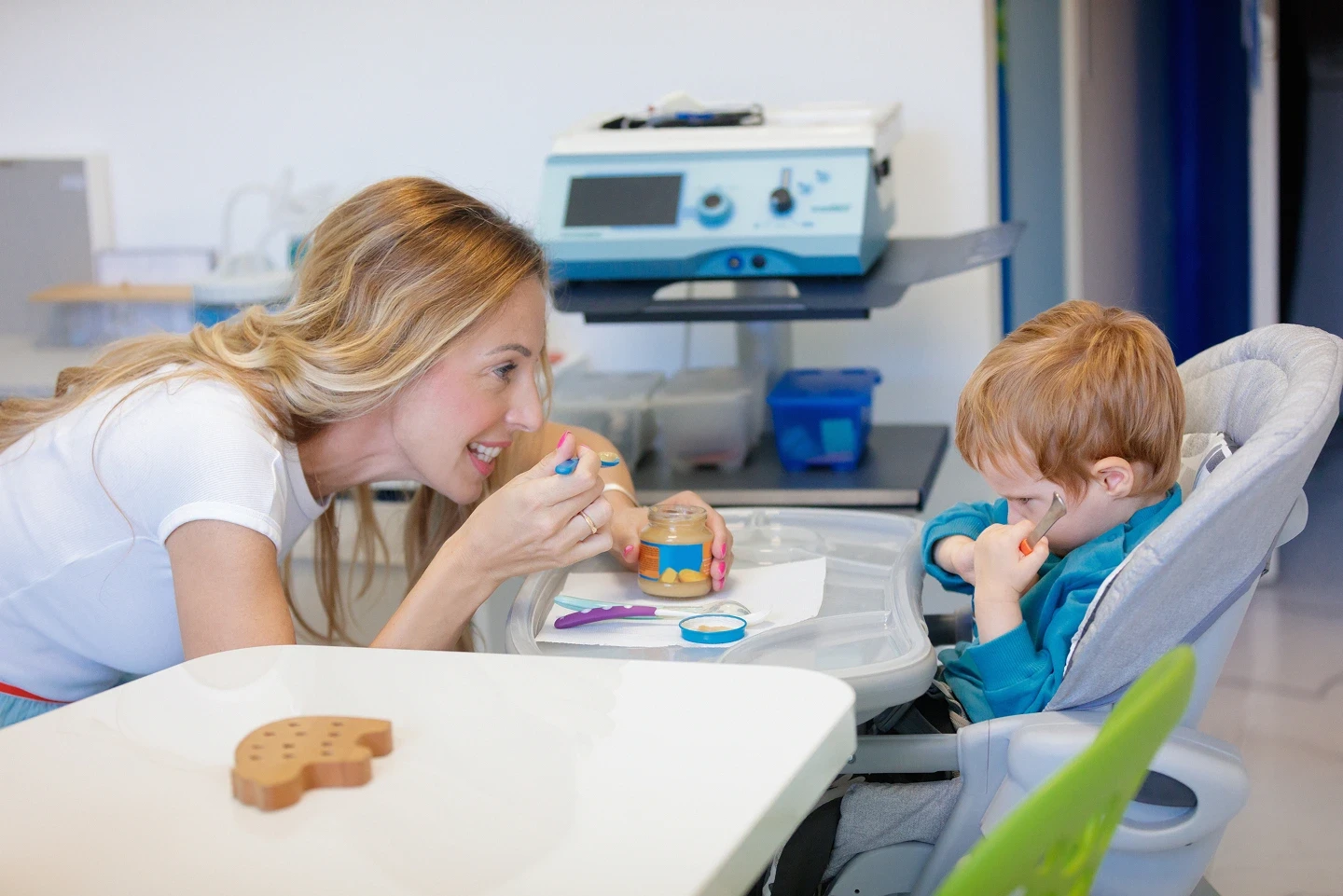
Feeding, nutrition, and mealtime routines
Environmental supports for focus, calmness, and participation
Task-specific practice that helps children build confidence and independence in real-life situations
Parent coaching strategies that support carryover of therapeutic skills across environments
This broader lens recognizes that children thrive best when physical, emotional, sensory, and environmental health are all supported together.

What Happens During an OT Evaluation?
A pediatric OT evaluation is designed to understand the child’s strengths, challenges, and daily functioning. The therapist may assess sensory processing, fine and gross motor skills, coordination, emotional regulation, feeding skills, visual-motor integration, and participation in everyday routines.
Parents are often asked detailed questions about the child’s development, sleep habits, sensory preferences, feeding patterns, school experiences, and emotional responses across environments.
The therapist may also observe how the child moves, plays, transitions between activities, communicates, and responds to sensory input in real time. The goal is to create an individualized treatment plan that supports both the child and family.
Research also emphasizes the importance of using evidence-based assessments and measurable goals to guide intervention planning and monitor progress over time.
Why Parent Involvement Matters
Research consistently shows that parent involvement improves therapy outcomes. Children often make the most progress when supportive strategies are integrated naturally into home and school routines.
Occupational therapists frequently help families implement practical strategies such as sensory-friendly calming routines, movement breaks, bedtime routines that support circadian health, feeding supports, emotional regulation tools, and play-based developmental activities.
This collaborative approach helps parents feel empowered while creating consistency across environments.
Family-centered care has been identified as one of the strongest evidence-based approaches in pediatric occupational therapy. This model recognizes parents and caregivers as essential partners in helping children generalize skills beyond the therapy setting and into everyday life.
Final Thoughts
Pediatric occupational therapy can help children build confidence, emotional regulation, sensory integration, motor coordination, and greater independence in daily life.
From an integrative perspective, therapy is not simply about isolated skills—it is about supporting the developing nervous system as a whole. Movement, sleep, nutrition, sensory experiences, emotional connection, and family support all contribute to healthy development.
For families in Los Angeles, finding the right pediatric OT can provide both practical tools and compassionate guidance while helping children build the foundation to thrive at home, school, and in everyday life.
References
Novak I, Honan I. Effectiveness of paediatric occupational therapy for children with disabilities: A systematic review. Aust Occup Ther J. 2019 Jun;66(3):258-273. doi: 10.1111/1440-1630.12573. Epub 2019 Apr 10. PMID: 30968419; PMCID: PMC6850210.
St John BM, Piller A, Tanner K, Mance E, Ausderau KK. State of the Science of Pediatric Feeding Evaluation, Intervention, and Policy. Am J Occup Ther. 2026;80(1):8001185010. doi:10.5014/ajot.2025.051354